Get A Quote






Warning Signs of a Slab Leak in Older Rockledge Homes
Proudly Serving Orlando, Brevard County and Indian River County.
schedule service today in minutes!
For homeowners in Rockledge, the charm of an older house often comes with unique maintenance challenges. One of the most serious and elusive issues is the slab leak, which occurs when the pressurized water lines running beneath your concrete foundation develop a breach. Because these pipes are buried under several inches of concrete and sandy Florida soil, a leak can persist for weeks or even months before it becomes visible to the naked eye. In older Rockledge homes, the original copper or galvanized steel pipes may have reached the end of their functional lifespan, making them particularly susceptible to corrosion and pinhole leaks.
Detecting a slab leak early is critical for preserving the structural integrity of your property. If left unaddressed, the constant flow of water can erode the soil beneath your foundation, leading to significant settling and expensive structural repairs. In this guide, we will examine the subtle warning signs that indicate a problem is brewing beneath your feet.
Unexplained Spikes in Your Monthly Water Bill
One of the first and most objective signs of a slab leak is a sudden, significant increase in your monthly water bill. In Rockledge, where many homes receive water through the City of Cocoa or local municipal utilities, residents are generally accustomed to a predictable monthly expense tied to their regular usage. If you notice that your bill has jumped by thirty dollars or more without a corresponding change in your lifestyle, it is time to investigate. Unlike a dripping faucet or a running toilet, a slab leak is often a continuous, pressurized stream of water that never stops. This means your water meter is spinning twenty-four hours a day, even while your family is asleep.
Many older homes in our area still use original copper piping installed decades ago. These pipes can develop tiny pinholes due to electrolysis or age, allowing hundreds of gallons of water to escape into the sandy Florida soil each day. Because the water is seeping directly into the ground beneath your home, you will not see a puddle or wet spot to justify the extra cost. Instead, you are left with a bill that reflects the usage of a much larger household. Monitoring your utility statement is the most effective way to catch these “silent” leaks before they cause physical damage to your structure.
- Constant Meter Movement: Check your water meter when no taps are running to see if the leak indicator dial is spinning.
- Tiered Pricing Impact: Many local utilities use tiered pricing, meaning a slab leak can push you into a much more expensive billing bracket.
- Sudden Increases: A jump of twenty percent or more in a single month usually indicates a mechanical failure rather than a change in habits.
- Comparison with Neighbors: If your bill is significantly higher than that of similar homes in your Rockledge neighborhood, an underground leak is likely the cause.
If you suspect your bill is too high, you can perform a simple test by shutting off your main water valve and checking the meter again. If the meter continues to move even when the house is disconnected from the supply, the leak is located between the meter and your home. However, if the meter stops but resumes when you turn the valve back on, the leak is likely within the footprint of your foundation. Addressing this issue immediately is the only way to stop the financial drain and prevent the water from further saturating the soil that supports your home.
Warm Spots and Cold Dampness: How Your Floors Talk
Your flooring is often the most obvious sign of a slab leak. In older Rockledge homes where tile and laminate are popular choices, the concrete slab acts as a conductor for the water and temperature changes occurring beneath it. If a hot water line develops a leak, the surrounding concrete absorbs the thermal energy and radiates it upward. You might notice a specific patch of your kitchen or bathroom floor that feels strangely cozy underfoot, even when the air conditioning is running. While a warm spot on the tile might seem like a minor quirk, it is a clear sign that a pressurized hot-water pipe is releasing heated water directly into your foundation.
Cold water leaks present a different set of symptoms that are equally concerning. Because the water is cooler than your home’s ambient temperature, it can cause localized dampness and condensation. In the high humidity of Brevard County, this excess moisture often leads to “sweating” floors or carpet that feels perpetually clammy. If you have hardwood or laminate flooring, the constant presence of water beneath the planks will cause the material to cup, warp, or buckle. For Rockledge residents living in homes built in the 1960s or 70s, these flooring changes are often the first physical sign that the original plumbing is failing.
- Hot Spots: Unexplained warmth in a specific area of the floor that persists throughout the day.
- Warped Planks: Hardwood or laminate boards that are beginning to lift or curve at the edges.
- Bubbling Linoleum: Moisture trapped under vinyl or linoleum causes the adhesive to fail and the material to blister.
- Damp Carpeting: Areas of carpet that remain wet or cold even after you have tried to dry them with a fan.
- Condensation on Tile: Droplets of water appearing on the surface of tiles in areas far away from sinks or showers.
Ignoring these changes in your flooring can lead to much more than just a ruined carpet. Moisture rising through the slab can damage baseboards and the bottom of your drywall, leading to structural rot that is far more expensive to repair than the leak itself. If you find yourself avoiding a certain part of the room because the floor feels “off,” it is likely your home’s way of alerting you to a subsurface problem. Professional leak detection can pinpoint the exact location of the thermal anomaly, enabling a targeted repair that preserves as much of your flooring as possible.
The Sound of Silence: Hearing Water When Taps are Off
In the quiet hours of the morning or late at night, your home should be relatively silent. One of the most haunting indicators of a slab leak in an older Rockledge home is the sound of running water when every faucet, showerhead, and appliance is completely shut off. Because the pipes under your foundation are pressurized, a break in the line creates a constant hissing, rushing, or splashing sound as water escapes into the void beneath the concrete. In many cases, homeowners describe it as a faint white noise or the sound of a toilet that never finishes its flush cycle.
This auditory cue is often most prominent in bathrooms or laundry rooms, where plumbing lines are concentrated. If you press your ear against a wall or the floor in these areas and hear a muffled humming, it is often the sound of a high-pressure leak vibrating through the copper pipes. Since Rockledge homes sit on a mix of sand and clay, a large leak can create a cavernous space under the slab, amplifying the sound of rushing water.
- Hissing Sounds: Typically indicates a pinhole leak in a high-pressure line.
- Gurgling or Splashing: Suggests a larger break where water is pooling and displacing soil.
- Vibrating Pipes: You may feel a slight tremor in the walls or under the floor when standing near the source.
- Persistent Toilet Noises: Hearing a sound like a filling tank even when the toilet has not been used for hours.
If you suspect you hear water, you can often confirm it by checking your water meter outside. If the meter is ticking over while the house is silent, that rushing sound is literally the sound of money and structural integrity washing away. Professional technicians use specialized acoustic listening devices to map these sounds through the concrete. By identifying the exact frequency and location of the vibration, they can locate the leak without tearing up your entire home, turning a potentially massive demolition project into a precise, surgical repair.
Foundation Cracks and Structural Shifting in Older Homes
The soil in Rockledge is predominantly sandy, which provides a decent base for construction but is highly susceptible to erosion from moving water. When a slab leak occurs, the water doesn’t just sit under the concrete; it creates a path of least resistance through the soil. Over time, this constant flow washes away the sediment that supports the weight of your home. This process, known as subsidence, causes the concrete slab to settle unevenly. In an older home, where the foundation has already undergone decades of natural settling, this sudden shift often manifests as new, jagged cracks in your tile, baseboards, or even the exterior stucco of your house.
These structural warnings are often dismissed as simple “house aging,” but they are actually a cry for help from your foundation. If you notice that doors are suddenly difficult to close or that windows are sticking in their frames, it indicates that the house is no longer level. When water saturates the ground beneath one corner of a room, that area may sink just a fraction of an inch, which is enough to throw the entire wall out of alignment. For homeowners in the more established neighborhoods of Rockledge, these shifts can be a precursor to a much more expensive foundation repair if the water source is not stopped immediately.
- Hairline Cracks: New cracks appearing in flooring or along the joints where the wall meets the floor.
- Separating Baseboards: Gaps forming between the bottom of your walls and the floor.
- Sticking Doors and Windows: Frames that have become warped due to the house shifting off its level.
- Exterior Stucco Cracks: Horizontal or vertical fractures appearing on the outside of your home near the ground level.
- Sloping Floors: A noticeable tilt in the floor that causes small objects to roll toward one side of the room.
Addressing a slab leak at this stage is a race against time. The longer the water flows, the more soil is displaced, and the greater the risk of a “void” forming under your house. A professional inspection can determine whether the cracking is caused by the home’s natural age or by hydraulic pressure from a leaking pipe. By stabilizing the plumbing first, you can prevent further movement and avoid the significant expense of mud-jacking or helical pier installation to level your foundation.
The Musty Odor of Hidden Mold Growth
The intense humidity in Brevard County already makes mold a constant concern for Florida residents, but a slab leak takes this threat to a whole new level. When water escapes from a pipe beneath the foundation, the moisture naturally wicks upward through the porous concrete. This creates a perpetually damp environment in the dark, unventilated spaces between your slab and flooring, or within the base of your walls. In older Rockledge homes, this hidden moisture often leads to mold and mildew growth long before any visible water damage appears on the surface.
If you enter a room and notice a persistent, earthy, or “locker room” smell that doesn’t go away after cleaning, you are likely smelling the metabolic byproducts of a mold colony. This odor is often most concentrated near the floor or inside closets where air circulation is limited. Because moisture is coming from beneath the house, standard dehumidifiers often cannot keep up with the constant influx of water. For families with respiratory sensitivities or allergies, hidden mold can cause unexplained coughing, sneezing, or skin irritation, making a professional plumbing evaluation a matter of both home maintenance and personal health.
- Persistent Odors: A musty smell that remains even after deep cleaning the carpets or scrubbing the floors.
- Discolored Baseboards: Dark spots or a fuzzy texture appearing on the wood or MDF trim at the bottom of your walls.
- Allergy Flare-ups: Increased respiratory issues among household members when they are in specific areas of the home.
- Damp Drywall: The bottom edge of your walls feels soft or “spongy” to the touch, indicating they are absorbing moisture from the slab.
- Peeling Paint: Paint or wallpaper near the floor line that is starting to bubble or flake away due to moisture pressure.
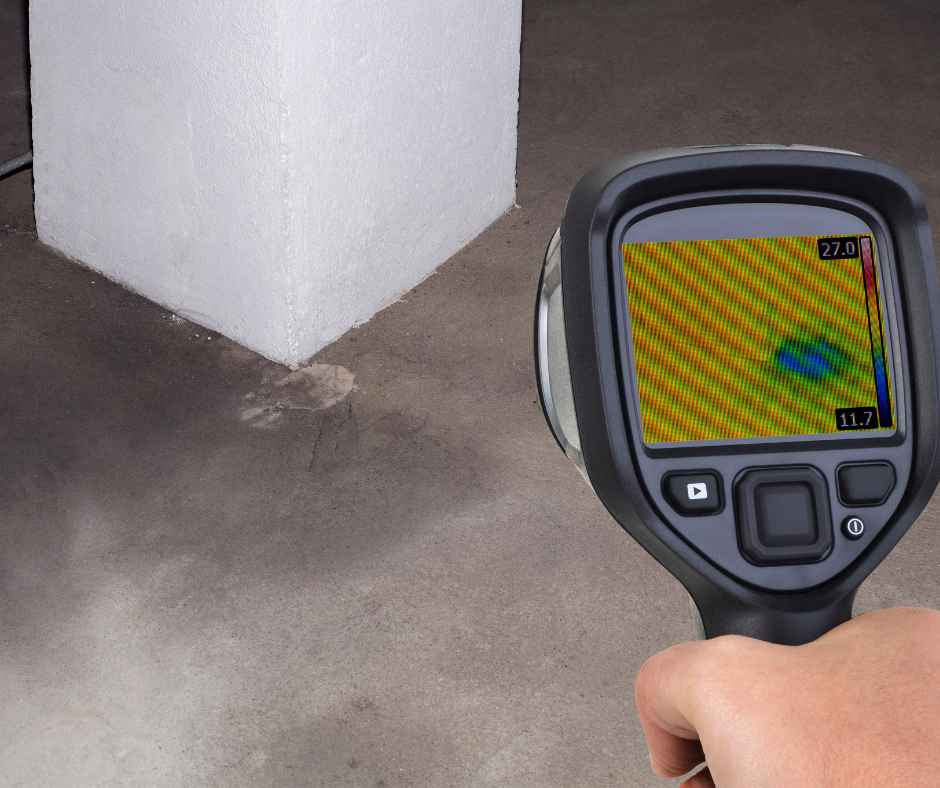
Detecting mold early is essential to prevent it from spreading into your HVAC system or throughout your home’s structural framing. A professional team from Mac 5 Services can use moisture meters and infrared cameras to see through your walls and floors, identifying the exact wet zones without having to peel back your carpet or remove your baseboards. By stopping the slab leak at its source, you cut off the “food” supply for the mold, allowing you to properly remediate the area and restore the fresh, clean air quality your family deserves.
Protecting Your Rockledge Home with Mac 5 Services
A slab leak is a formidable challenge, but it can be managed with the right expertise and timely intervention. For the residents of Rockledge, preserving the value and safety of an older home means staying tuned to the subtle cues your house provides. Whether it is a strange warmth under your feet, a jump in your utility bill, or a faint sound of rushing water, these signs are your early warning system. Taking action today can be the difference between a surgical plumbing repair and a massive foundation overhaul.
Our team at Mac 5 Services understands the unique architectural and geological conditions of Brevard County. We use the most advanced non-invasive leak-detection technology to locate and repair slab leaks with minimal disruption to your daily routine. If you suspect your foundation is hiding a plumbing problem, do not wait for the damage to spread. Contact us today to schedule a comprehensive inspection and help keep your Rockledge home on solid ground.
Frequently Asked Questions
Can I just ignore a small slab leak if it isn’t causing a puddle?
Ignoring even a minor leak is dangerous. Over time, the constant water pressure can erode the soil under your foundation, leading to “voids” that cause the slab to crack or collapse. Additionally, a small leak today can become a major flood tomorrow as the pipe continues to deteriorate.
How does a professional find a leak under a concrete floor without breaking it?
Technicians use a combination of electronic acoustic equipment and thermal imaging. Acoustic sensors “listen” for the specific frequency of pressurized water escaping a pipe, while thermal cameras detect the temperature difference caused by hot or cold water saturating the concrete.
Is a slab leak covered by my homeowner’s insurance?
In many cases, Florida insurance policies cover the “tear out” and “put back” costs required to access the leak, as well as the damage to your flooring or walls. However, they may not cover the actual repair of the pipe itself. We recommend reviewing your specific policy with your agent.
How long does it typically take to fix a slab leak?
Most slab leak repairs can be completed in one to two days. This includes the time needed for precise electronic detection and the subsequent repair, which may involve a localized “spot repair” or a more comprehensive “re-pipe” that bypasses the old line entirely.
Will a slab leak eventually come through the floor?
Not necessarily. In many Rockledge homes, the water simply drains into the sandy soil beneath the house. While this might seem “cleaner” than a flood, it is actually more dangerous because it silently undermines the structural stability of your foundation.