Get A Quote






Ductless Mini Splits for Florida Room and Garage Conversions: A Practical Guide
Proudly Serving Orlando, Brevard County and Indian River County.
schedule service today in minutes!
Turning a garage, enclosed patio, or Florida room into usable living space can give your home more room for an office, gym, guest area, hobby space, or family room. The challenge is keeping that new space comfortable in Florida’s heat and humidity.
Converted spaces are often difficult to cool with the home’s existing central HVAC system. They may have limited insulation, significant sun exposure, large windows, or no existing ductwork. Extending ducts isn’t always practical, and the current AC system may not be designed to handle the added cooling load.
In this guide, we’ll explain how ductless mini splits work for Florida room and garage conversions, what makes them a practical cooling option, how humidity and sizing affect performance, and what homeowners should consider before installation.
Are Ductless Mini Splits Good for Garage and Florida Room Conversions?
Yes. Ductless mini splits can be an effective option for converted garages, Florida rooms, enclosed patios, and other spaces that are difficult to connect to an existing central HVAC system.
Instead of extending ductwork from the main system, a mini split provides heating and cooling directly to the converted space.
This can offer several advantages:
-
Independent temperature control
-
No need for extensive new ductwork
-
Targeted cooling for the converted area
-
Heating and cooling from many heat pump models
-
Flexible installation options
-
Less dependence on the capacity of the existing duct system
However, installing a mini split does not automatically guarantee good comfort. The condition of the converted space, equipment sizing, installation quality, and insulation all affect how well the system performs.
A professional HVAC evaluation can determine whether ductless cooling is appropriate for the room and what capacity the system needs.
Why Are Converted Garages and Florida Rooms Hard to Cool?
Garages and Florida rooms often were not originally designed to meet the same comfort standards as the rest of the home.
A garage, for example, may have been constructed primarily to protect vehicles and provide storage. A Florida room may have large glass areas designed to create a bright connection to the outdoors.
When these spaces become living areas, several characteristics can increase the cooling load:
-
Limited insulation: Walls, ceilings, and garage doors may have less insulation than conditioned portions of the house.
-
Large windows: Florida rooms can experience substantial solar heat gain.
-
Air leakage: Gaps around doors, windows, and converted garage openings can allow hot outdoor air inside.
-
Roof exposure: A poorly insulated ceiling or roof can transfer significant heat into the space.
-
Exterior walls: Converted rooms may have more surfaces exposed directly to outdoor temperatures.
-
No existing ductwork: The central HVAC system may never have been designed to serve the area.
-
Different usage: Adding people, electronics, exercise equipment, or appliances can increase heat inside the room.
Before selecting an AC system, homeowners should consider these conditions. Improving the space itself can make it easier for any HVAC equipment to maintain comfortable temperatures.
How Does a Ductless Mini Split Work in a Converted Space?
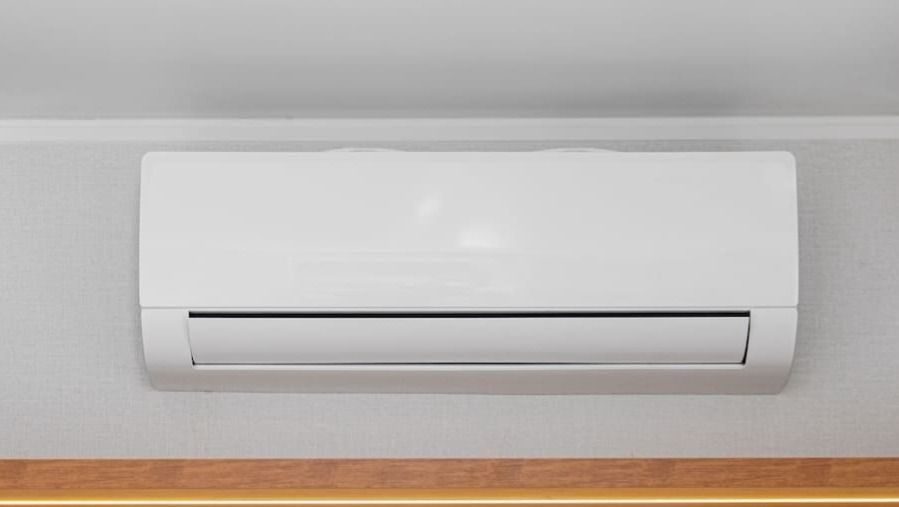
A ductless mini split typically consists of an outdoor unit connected to one or more indoor units. Refrigerant lines run between the components, allowing the system to move heat rather than relying on ducts to distribute conditioned air.
During cooling, the indoor unit removes heat from the room and transfers it outside. Many mini splits are heat pumps, which means they can reverse the process when heating is needed.
For a converted garage or Florida room, the indoor unit serves the space directly.
A typical installation involves:
-
An indoor air-handling unit
-
An outdoor condenser or heat pump
-
Refrigerant lines between the units
-
Electrical connections
-
A condensate drainage system
-
Controls for adjusting the temperature
Because the converted area has its own temperature control, homeowners do not necessarily need to change the thermostat setting for the rest of the house just to make one room more comfortable.
What Are the Benefits of a Mini Split for a Florida Room or Garage?
The primary benefit of a mini split is targeted comfort. The equipment serves only the area it’s connected to, rather than relying on the home’s existing ductwork.
Potential advantages include:
-
Individual temperature control: Adjust the converted room independently from the rest of the house.
-
No major duct extension: This can simplify cooling spaces without existing ductwork.
-
Heating and cooling: Heat pump mini splits can provide both functions.
-
Flexible applications: Systems can serve offices, gyms, guest spaces, workshops, and other converted rooms.
-
Targeted operation: Condition the area based on how and when you use it.
-
More permanent comfort: A professionally installed mini split can provide an alternative to relying on portable or window air conditioners.
Ductless systems can also be useful when extending central HVAC ducts would require significant modifications.
The important question is not simply whether a mini split can cool the space. It is whether the system and room are properly prepared to work together.
Can a Mini Split Help With Florida Humidity?
Yes, a properly sized mini split can remove moisture from indoor air as part of the cooling process. That can be especially valuable in Florida, where humidity is a major part of indoor comfort.
Equipment sizing matters, though.
An oversized system may lower the room temperature quickly and then shut off. Shorter cooling cycles can reduce the time the equipment spends removing moisture from the air.
For better comfort, contractors should consider both temperature and humidity when selecting equipment.
Homeowners should also understand what an air conditioner cannot fix. A mini split is not a solution for:
-
Roof or plumbing leaks
-
Water intrusion around windows
-
Moisture entering through an improperly converted garage opening
-
Significant gaps in exterior walls
-
Other building-envelope moisture problems
If the room has an underlying water or moisture issue, address that problem before expecting new HVAC equipment to solve it.
What Size Mini Split Do You Need for a Garage or Florida Room?
The correct mini split size depends on more than the room’s square footage.
Online rules that recommend a certain number of BTUs based only on floor area can miss important characteristics of converted spaces. A 400-square-foot interior room and a 400-square-foot Florida room surrounded by windows may have very different cooling requirements.
Professional sizing should consider factors such as:
-
Room dimensions
-
Ceiling height
-
Wall and ceiling insulation
-
Number and size of windows
-
Window orientation
-
Direct sun exposure
-
Exterior wall area
-
Air leakage
-
Condition of converted garage-door openings
-
Number of occupants
-
Electronics or appliances
-
How the room will be used
A professional load calculation provides a better basis for selecting equipment than square footage alone.
Undersized equipment may struggle to maintain the desired temperature during hot weather. Oversizing can create its own performance and humidity-control problems.
Choosing the right capacity is one of the most important steps in a successful mini split installation.
What Should You Fix Before Installing a Mini Split in a Converted Garage?
Before adding air conditioning, make sure the converted garage can function as a conditioned space.
Otherwise, you could install new equipment only to have much of its cooling capacity lost through poorly insulated or unsealed areas.
Evaluate:
-
Walls: Determine whether exterior walls have appropriate insulation.
-
Ceiling: Check the insulation between the garage and attic or roof.
-
Former garage-door opening: Make sure converted openings are properly sealed and insulated.
-
Windows and exterior doors: Look for significant gaps or air leakage.
-
Moisture: Address water intrusion before HVAC installation.
-
Electrical capacity: Confirm the home can support the new equipment.
-
Room construction: Make sure the conversion itself meets applicable requirements.
A similar evaluation is helpful for Florida rooms. Large windows, sun exposure, roof construction, and air leakage can significantly affect cooling requirements.
Improving these conditions can help the mini split provide more consistent comfort.
Where Should a Mini Split Be Installed in a Converted Room?
Indoor unit placement affects how effectively conditioned air circulates throughout the space.
The unit should generally have a clear path to distribute air, rather than being blocked by tall furniture, shelving, or other obstructions.
Installation planning should consider:
-
Air distribution throughout the room
-
Wall or ceiling space
-
Furniture placement
-
Condensate drainage
-
Refrigerant line routing
-
Access for future maintenance
-
Location of the outdoor unit
-
Manufacturer clearance requirements
Outdoor equipment also needs sufficient airflow and appropriate service access.
Choosing a location solely based on appearance can compromise performance. A professional installer can balance comfort, equipment requirements, accessibility, and aesthetics when determining where the system should go.
Is a Mini Split Better Than Extending Your Existing Central AC?
Sometimes, but not always.
Extending the home’s existing ductwork may seem like the simplest option, but the central HVAC system was sized for the home’s original cooling load. Adding another conditioned room without evaluating system capacity can affect comfort throughout the house.
A mini split may make more sense when:
-
The converted space has no existing ducts.
-
Extending ductwork would require extensive modifications.
-
You want independent temperature control.
-
The existing HVAC system cannot comfortably handle additional load.
-
The room is used on a different schedule than the rest of the house.
Extending central HVAC may be worth considering when:
-
Existing ductwork is conveniently located.
-
The current system has sufficient capacity.
-
Duct modifications can be completed effectively.
-
The homeowner prefers one central system.
Before choosing either option, have an HVAC professional evaluate the existing system and the converted area. Simply adding a duct to a garage or Florida room doesn’t guarantee the central system can properly condition the additional space.
Make Your Converted Space Comfortable With Mac 5 Services
A garage or Florida room conversion can add useful space to your home, but Florida’s heat and humidity make cooling an important part of the project.
Ductless mini splits offer a practical option when extending existing ductwork is difficult or when homeowners want independent control over the converted area. The best results depend on more than choosing an indoor unit, though. Insulation, air sealing, moisture conditions, equipment sizing, placement, and professional installation all matter.
Mac 5 Services can evaluate your converted space and help determine whether a ductless mini split or another HVAC solution fits your home’s needs. If you’re planning to cool a garage, Florida room, or other converted space, contact us today to schedule service and explore your options.